Learning how to write a resume for your first job comes down to five things: a clean format, education placed near the top, relevant experience drawn from school and volunteering, a focused skills section, and bullet points that show results. No paid job history required. Every professional you've ever admired submitted a first resume at …
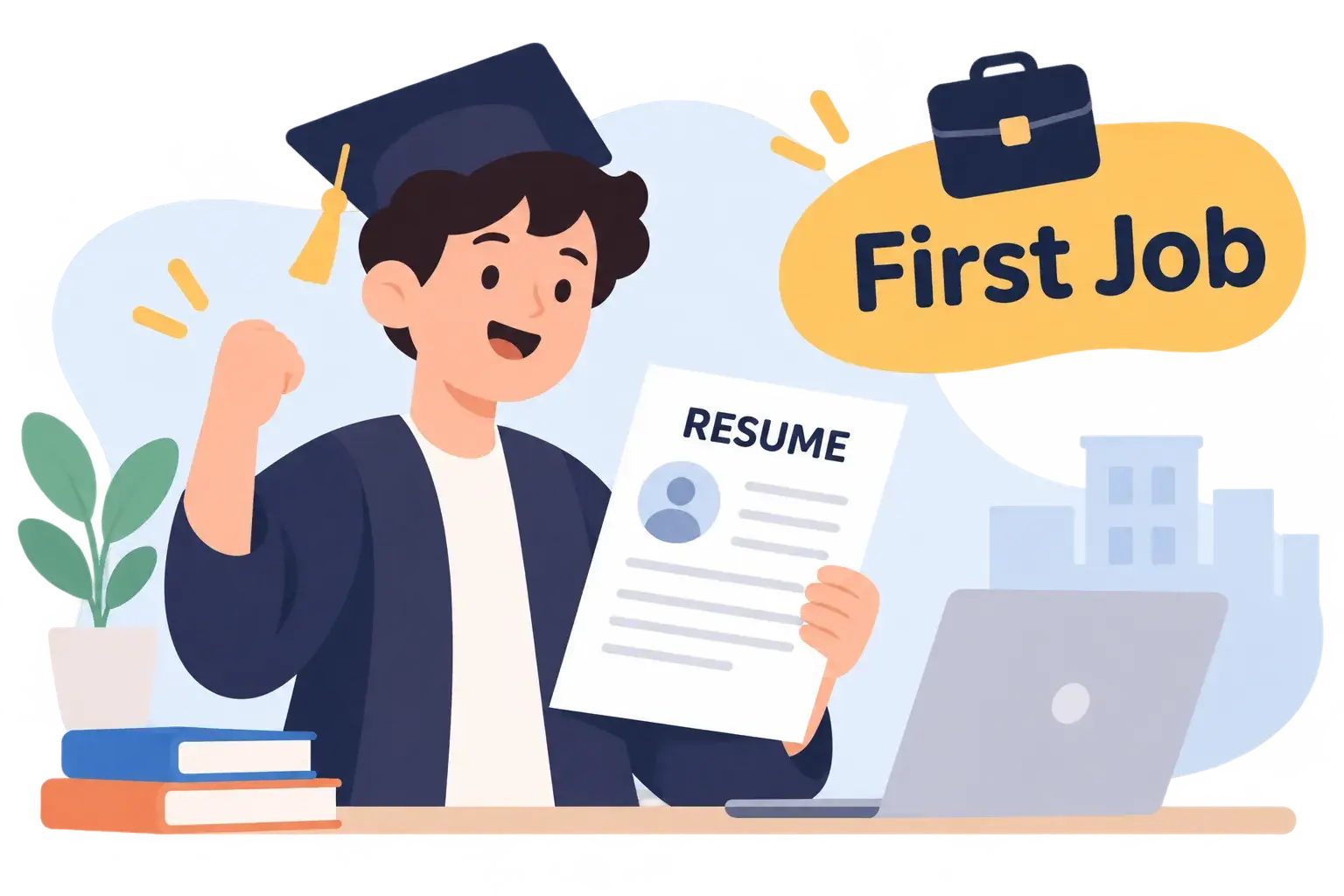
Learning how to write a resume for your first job comes down to five things: a clean format, education placed near the top, relevant experience drawn from school and volunteering, a focused skills section, and bullet points that show results. No paid job history required. Every professional you’ve ever admired submitted a first resume at some point, and you’re in the same position they once were.
The good news is that you already have more to work with than you think. School projects, volunteer shifts, club roles, and even organizing a community event are legitimate resume material. Employers hiring entry-level candidates know you haven’t managed a department yet. What they’re looking for is evidence that you can communicate, follow through, and show up. CV Studio offers guided templates designed for every career stage, including people writing their very first resume, so you can focus on your content instead of fighting with formatting.
Key takeaways
- Education comes first: When you have no work history, your degree, GPA, and coursework are your strongest credentials and belong near the top of the page.
- Unpaid experience counts: Volunteer work, school projects, and club roles belong under “Relevant Experience” and should be written exactly like paid jobs.
- One page is recommended: A tight, relevant single page signals focus and respects the reader’s time.
- Action verbs plus numbers: Bullets that start with a strong verb and include a specific number are far more persuasive than vague participation statements.
- Tailor for each application: You don’t rewrite everything. You adjust the objective, the skills emphasis, and the bullet order to match each posting’s language.
- Transferable skills are real skills: Communication, teamwork, and problem-solving developed in school or volunteering are exactly what entry-level employers list in job postings.
What sections go on a resume when you’ve never held a job?
Why education belongs near the top for first-time job seekers
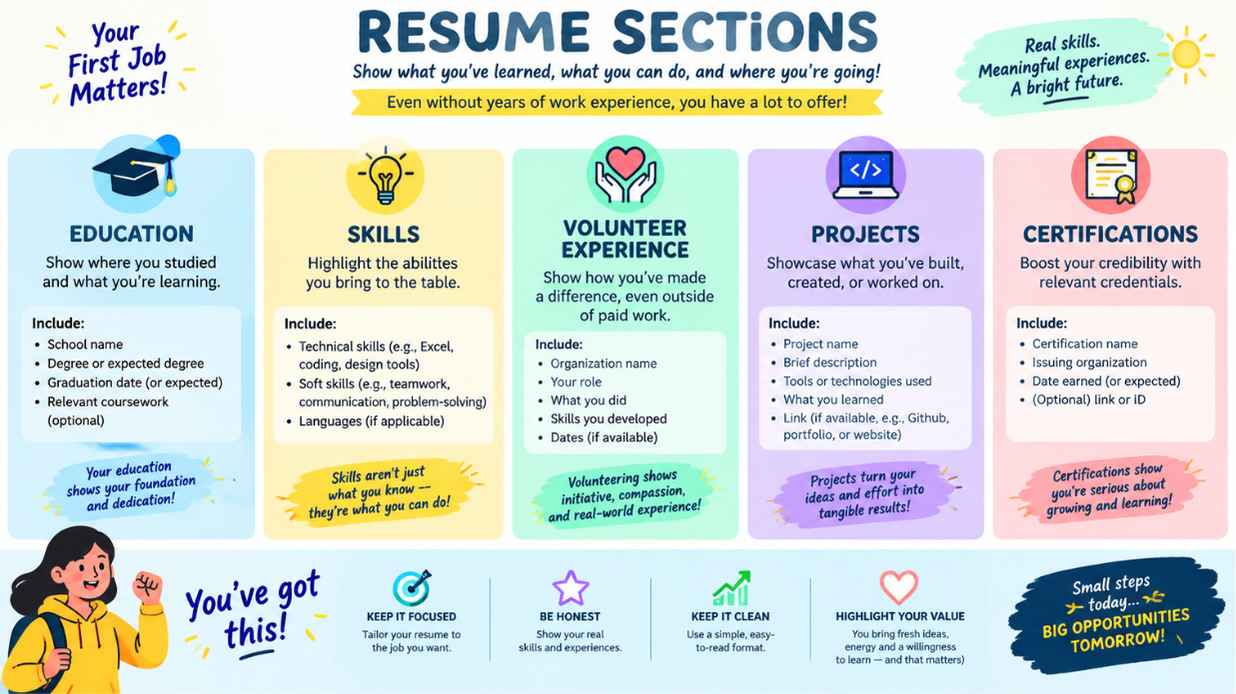
When you don’t have a work history, education is your strongest credential. For most first-time applicants, it makes sense to place it right after your contact information. Include your school name, degree or diploma, graduation date or expected date, relevant coursework, honors, and GPA if it strengthens your application.
This ordering makes sense to any hiring manager reviewing an entry-level resume. It signals where your value currently comes from and matches what employers expect to see. You’re not hiding your lack of experience; you’re leading with your most relevant qualification.
The sections a beginner resume needs, and the order that works
A solid first-job resume follows this sequence: contact information, an optional objective statement, education, relevant experience (which includes unpaid and informal experience), skills, and any additional sections like awards or certifications. That said, the order is flexible. If you have a standout volunteer role, it can appear before a less-relevant award. Put your best evidence where the reader sees it first.
The “relevant experience” section is where most first-timers underestimate themselves. Volunteer shifts, class projects, club leadership, and peer tutoring all belong here. If you’ve never received a paycheck, combine everything under one “Relevant Experience” header and arrange entries in reverse chronological order, most recent first.
How long should a first-job resume be?
One page. For a first-time job seeker, a single tight page communicates focus and respect for the reader’s time. A second page is earned through experience, not through padding with extra white space or repeating the same skill in three different ways.
Keep your font readable, leave enough white space to make the page breathable, and use consistent formatting throughout. Avoid photos, graphics, or complex column layouts that may not read properly through automated applicant-tracking systems. Simple, clean, and scannable is the goal.
How do you turn school projects, volunteer work, and activities into real experience?

Treating unpaid experience the same as paid experience
An employer cares about what you can do, not whether you received a paycheck for it. Volunteer work, school projects, club leadership, and informal roles like tutoring or helping organize a community event are all legitimate entries under a “Relevant Experience” section. Structure each entry the same way you would a job: role or project title, organization or course, dates, and two to four bullets.
The framing shift matters. When you stop thinking of these experiences as “not real jobs” and start thinking of them as evidence of capability, your resume gets sharper. That volunteer coordinator role at a food bank taught you logistics, teamwork, and public-facing communication, precisely what employers mean when they write “strong interpersonal skills required.”
Writing bullets that show results, not just participation
The formula that works is: action verb + what you did + how you did it + result or skill demonstrated. Start every bullet with a strong verb: organized, coordinated, managed, analyzed, presented, designed, researched. Then add context and, wherever possible, a number.
Numbers don’t have to be large to be effective: team size, event attendance, dollars raised, or weeks completed all add credibility. Even “Coordinated 12 volunteers during weekly food-distribution events serving approximately 150 families” is stronger than “Helped out at a food bank.”
Which activities are worth including and which to skip
Not every club or hobby belongs on the page. Include activities that demonstrate skills relevant to the role you want: leadership, communication, teamwork, organization, or technical ability. Leave out activities that don’t connect to anything in the job posting.
When space is tight, rank entries by relevance to the position, not by how much you enjoyed them. The resume is a business document, not a personal history. A robotics club role may be a stronger match for a data-entry position than a recreational sports team, depending on the duties and evidence each one offers, though any experience that shows relevant teamwork or reliability is worth considering.
What skills should you list when you have no work history?

Transferable skills employers actually look for in entry-level candidates
Entry-level job postings commonly prioritize transferable skills such as communication, teamwork, problem-solving, organization, time management, adaptability, leadership, attention to detail, research and analysis, and digital tools such as Microsoft Office or Google Workspace. These skills come from everyday contexts, not just jobs. Employers hiring first-time applicants already know this.
The key is to name the skill and pair it with an example from somewhere else on your resume so it doesn’t appear unsupported. A skills section that simply says “communication” and nothing else is weak. A skills section that says “communication” while your experience section shows you presenting findings to a class of 30 students is convincing.
How to list skills without sounding like a buzzword checklist
The most common beginner mistake is listing “hard-working, detail-oriented, team player” with no evidence anywhere on the page. Those phrases mean nothing without proof. Instead, match your skills section to the specific language in the job description, and let your experience bullets provide the evidence.
Prioritize hard, job-specific skills: software names, languages, tools, and platforms. Then add the soft skills that your bullets already demonstrate. “Used Excel to organize and analyze data for a business-analysis course” is a skills statement with a story behind it. “Excel” alone is just a word on a page.
What does a first-job resume actually look like?
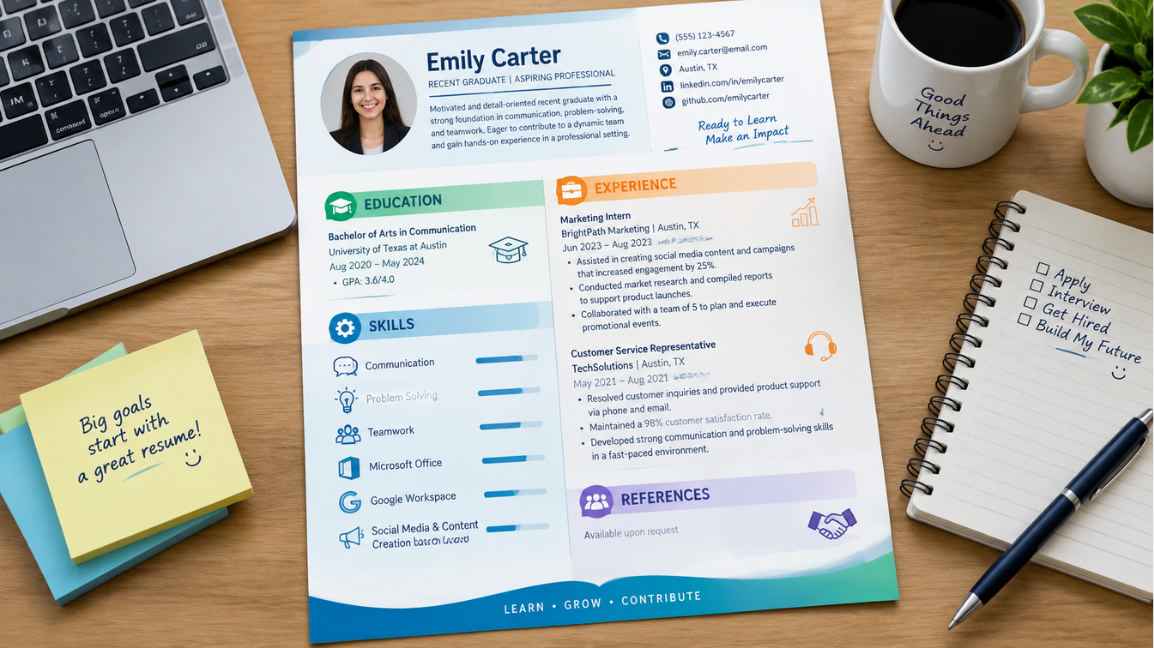
A sample entry-level resume, annotated
JORDAN TAYLOR
Chicago, IL | 555-123-4567 | [email protected]

OBJECTIVE
Motivated high school student seeking a part-time retail associate position.
Brings strong communication, teamwork, and organization skills developed
through volunteer work, school activities, and team projects.
Available evenings and weekends.


Breaking down what makes this resume work
The objective is specific: it names the type of role, connects relevant strengths, and includes availability.
When you work through CV Studio’s guided templates for entry-level candidates, you can organize your content in the same logical sequence shown above, fill in your details section by section, and download a polished file ready to send. The editor is designed to be easy to use, so your energy goes toward the content this article has helped you build.
How do you tailor your resume to match a specific job posting?
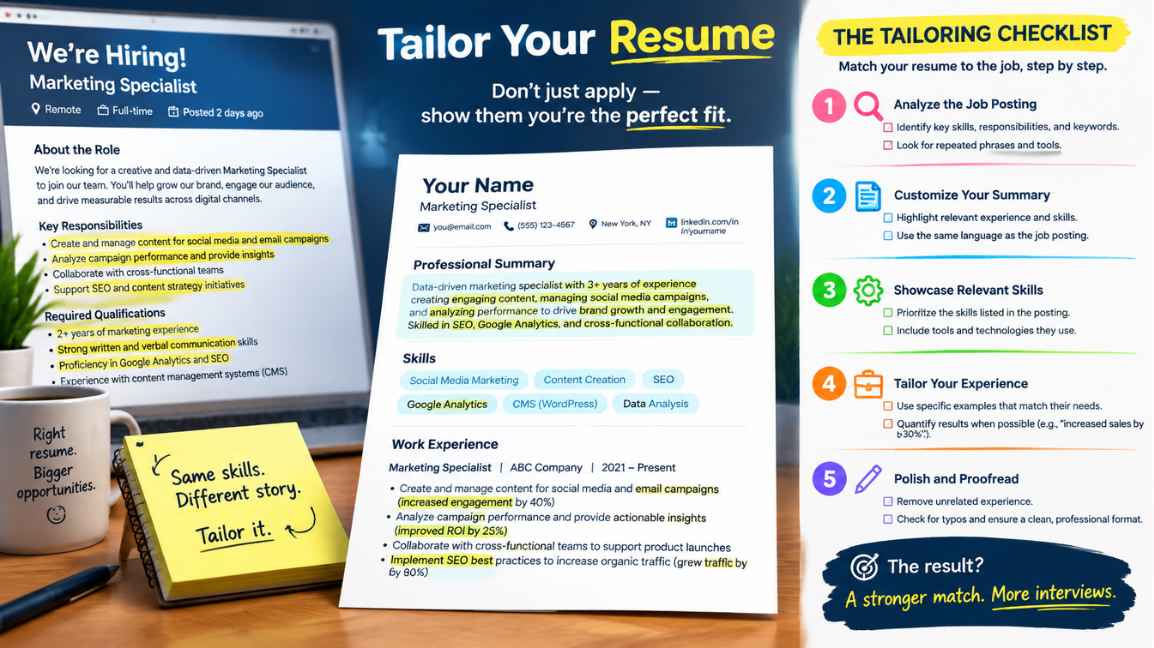
Reading a job posting like a checklist
Start with the three-column method. Draw three columns and label them: job requirements, your evidence, and keywords to use. Read through the posting and sort every requirement into “must-have” or “nice-to-have.” Then for each required qualification, find the honest evidence from your classes, volunteer work, clubs, or personal projects.
Rewrite your objective statement for each role. Name the target position directly. Connect two or three of your genuine strengths to it. A tailored objective immediately signals to the reader that this resume was written for their specific posting, not sent to fifty employers at once.
What to update for each application, and what stays the same
The core structure of your resume doesn’t change with every application. What changes: the objective, the order of bullet points under each entry, the skills emphasized, and the specific language used to mirror the posting. What stays the same: the honest account of what you’ve actually done.
Use the employer’s vocabulary when it fits your actual experience, for example, if a posting asks for “customer service skills” and you genuinely answered questions for event attendees or explained material as a tutor, that language describes what you did. Don’t use a term when it doesn’t fit. Before you submit, confirm that every required qualification you possess appears somewhere on the page, remove anything unrelated, and save the file with a clear name: something like Jordan-Taylor-Retail-Associate-Resume.pdf. Then proofread it one more time.
Your first resume is closer than you think
A strong first resume isn’t about having the perfect background. It’s about presenting the experience you already have in a format that communicates your potential clearly. The five pillars are straightforward: clean format, education near the top, relevant experience from school and volunteering, transferable skills with evidence, and tailored language for each application.
Start with one draft. It doesn’t have to be perfect on the first pass. Write down every project, volunteer role, club, and responsibility you can think of, then filter for relevance and add numbers wherever you honestly can. The structure this article laid out will keep you on track.
When you’re ready to build it out, CV Studio’s guided templates for entry-level candidates make it straightforward to organize every section, fill in your content, and download a finished resume ready to send. Every professional in every field started with a first resume. Yours is already taking shape.
Frequently Asked Questions
Should I include my GPA on my first resume?
Include your GPA if it strengthens your application. You can list it in your education section alongside your school, degree or diploma, graduation date, relevant coursework, and honors.
Do I need an objective statement on my first resume?
An objective statement is optional, but it can help you connect your strengths to a specific role. If you include one, name the position and connect two or three genuine strengths to it.
How should I format my resume for an applicant-tracking system?
Use a simple, clean layout and avoid photos, graphics, and complex columns that may not read properly through applicant-tracking systems. Keep the font readable and your formatting consistent.
What should I do before submitting my resume?
Before submitting, confirm that your resume includes every required qualification you possess and remove unrelated content. Save it with a clear file name and proofread it one more time.